


 Blog
Blog
Commercial Drone Use in Logistics: The Transformation of Modern Supply Chains
The logistics industry is witnessing a paradigm shift that is literally rising above the traditional constraints of roads and rails.
Editor’s note, August 2026. This post is from May 2026 and describes what Grasshopper was building at the time. The full-scale e350 was never built. Its scale proof of concept flew in September 2025, and we closed the chapter in 2026. See the e350.
The logistics industry is currently witnessing a paradigm shift that is literally rising above the traditional constraints of roads and rails. The integration of commercial drone use into the global supply chain is no longer a peripheral experiment conducted by tech giants. It has become a central strategy for businesses aiming to survive in an era of instant gratification and razor-thin margins. By reclaiming the sky, companies are finding innovative ways to bypass terrestrial congestion, offering a glimpse into a future where the movement of goods is fluid, autonomous, and remarkably efficient.
The Evolution of the Aerial Supply Chain
For over a century, the movement of goods relied on a rigid infrastructure of highways, shipping lanes, and railway tracks. This system, while robust, is increasingly vulnerable to urban density and the unpredictability of human-operated transit. As e-commerce continues to reshape consumer behavior, the pressure on the “last mile”, the final and most expensive leg of the delivery process, has reached a breaking point.
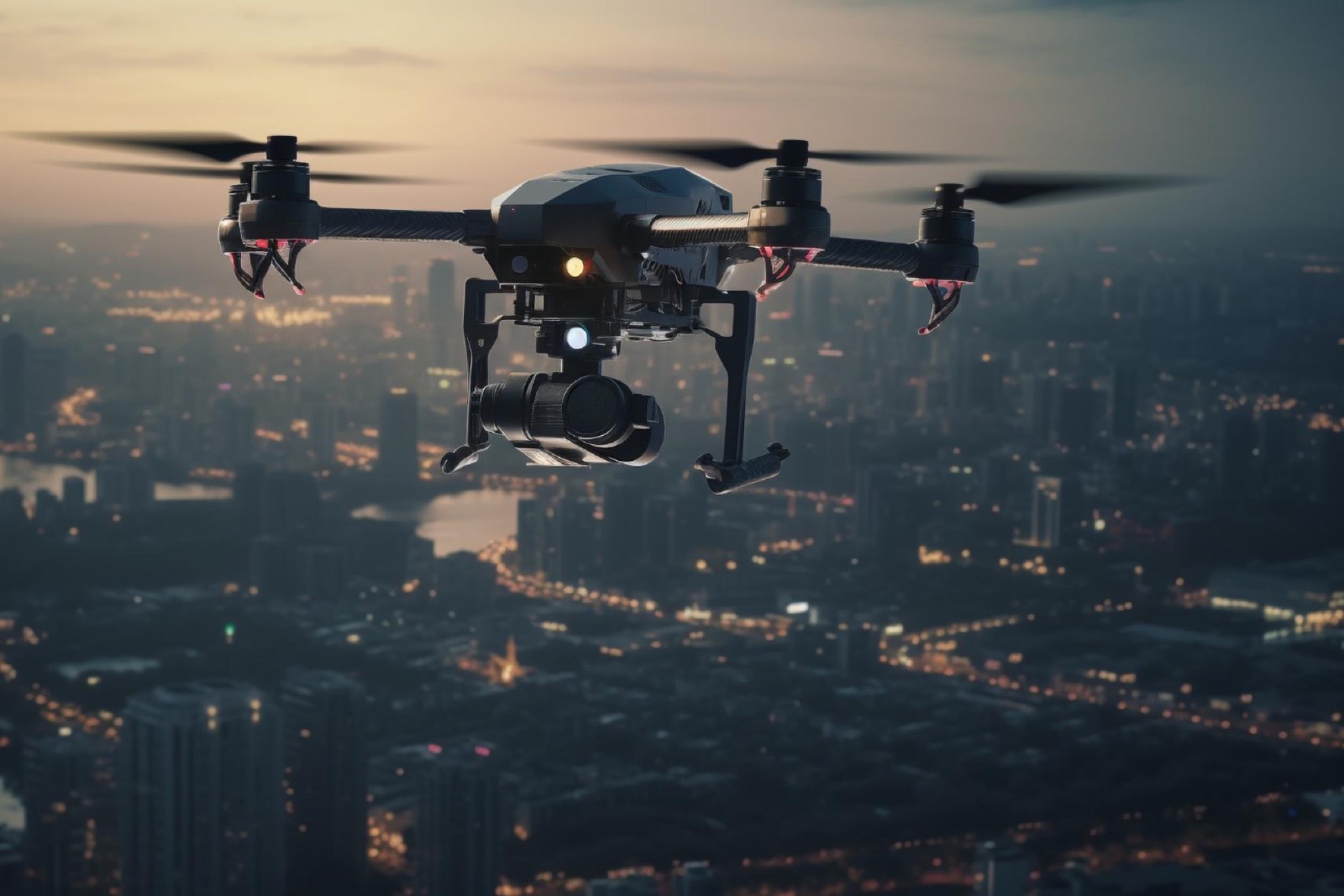
The emergence of commercial drone use offers a bypass to these systemic bottlenecks. Unlike traditional delivery vehicles, drones operate in a three-dimensional space, allowing for point-to-point transit that ignores traffic patterns and geographical obstacles. This transition from asphalt to the airway represents the most significant leap in logistics technology since the invention of the shipping container, moving the industry toward a decentralized model where speed is limited only by physics, not by traffic lights.
Redefining Industrial Logistics with Grasshopper Air Mobility
While much of the public discourse around drones focuses on small consumer deliveries, the true industrial revolution is happening in the “middle mile” and heavy-duty transport. This is where the impact on the supply chain is most profound, as businesses look for ways to move large-scale cargo between manufacturing hubs and distribution centers without the delays inherent in trucking.
A leading pioneer in this space is Grasshopper Air Mobility. Unlike companies focused on lightweight parcels, Grasshopper Air Mobility focuses on autonomous cargo eVTOL (Electric Vertical Take-Off and Landing) aircraft designed for industrial applications. Their technology was designed for the transport of significant payloads directly between production sites, effectively creating an “aerial conveyor belt” for manufacturers. By removing the need for a human pilot and a runway, it was meant to provide a level of flexibility that traditional logistics providers simply cannot match, allowing companies to maintain lean inventories and respond to production needs in real-time.
Enhancing Operational Efficiency and Cost Reduction
The economic argument for commercial drone use is grounded in the dramatic reduction of operational overhead. Traditional logistics requires a massive investment in vehicles, fuel, and human labor, all of which are subject to inflationary pressures and inefficiency. Drones, particularly those powered by electric propulsion, offer a lower cost per mile by eliminating the need for a driver and reducing energy consumption per unit of cargo.
Furthermore, the maintenance of a drone fleet is often more predictable than that of a fleet of internal combustion trucks. For businesses, this translates into higher uptime and a more resilient supply chain. When a company integrates heavy-duty solutions of this kind, they are not only buying a vehicle. They are investing in a system that reduces the complexity of the supply chain by cutting out multiple touchpoints where delays and costs typically accumulate.
The Role of Sustainability in the New Logistics Era
Modern businesses are under increasing pressure to meet stringent environmental standards. The logistics sector has traditionally been a major contributor to carbon emissions, primarily due to the reliance on heavy-duty diesel engines for transport. The shift toward commercial drone use provides a tangible path toward decarbonization.
Electric propulsion removes tailpipe emissions at the point of use, but the honest figure is a life-cycle one. Stolaroff and colleagues, in Nature Communications in 2018, put small-package drone delivery between 23 and 54 percent below a diesel truck on greenhouse gases, with the range set by how clean the local electricity is. Drones also spare public roads the wear that heavy vehicles cause.
Navigating the Regulatory and Technical Landscape
The journey toward a sky filled with delivery drones is not without its challenges. The transition requires a sophisticated interplay between advanced hardware, artificial intelligence, and evolving legal frameworks. Regulatory bodies worldwide are currently working to establish “U-Space” or Unmanned Traffic Management (UTM) systems that allow autonomous craft to share the airspace safely with manned aviation.
Technological hurdles, such as battery life and autonomous navigation in inclement weather, are being solved through rapid iteration. Companies are now implementing “Detect and Avoid” (DAA) sensors that allow drones to make split-second decisions without human intervention. This level of autonomy is critical for scaling operations. For the supply chain to be truly transformed, these systems must be able to operate at scale with minimal supervision, seamlessly weaving through the sky to deliver everything from medical supplies to industrial components.
The Impact on Global Trade and Rural Connectivity
One of the most human-centric benefits of commercial drone use is its ability to bridge the gap between urban centers and underserved rural areas. In many parts of the world, poor road infrastructure acts as a barrier to economic growth and healthcare access. Drones act as a great equalizer, providing remote communities with the same level of logistical connectivity as a major metropolis.
For global trade, this means that emerging markets can leapfrog the need for massive highway investments, moving straight to a digital and aerial logistics model. This connectivity allows small businesses in remote areas to participate in the global economy, as drones can pick up local products and deliver them to regional hubs in a fraction of the time it would take by land.
Looking Ahead at the Autonomous Supply Chain
As we look toward the end of the decade, the distinction between “traditional logistics” and “aerial logistics” will likely fade. We are entering an era of multimodal synchronization where drones, autonomous ships, and electric trucks work in a choreographed dance managed by artificial intelligence.
In this future, the supply chain becomes invisible and frictionless. The heavy lifting provided by innovators like Grasshopper Air Mobility ensures that the backbone of industry remains strong, while smaller drones handle the final interaction with the consumer. The transformation of the supply chain through commercial drone use is not only a technological upgrade. It is a fundamental reimagining of how we connect the world’s resources with the people who need them. Businesses that embrace this aerial frontier today are the ones that will lead the global economy tomorrow.