

 Blog
Blog
How the role of drone pilots is evolving with AI and robotics
Flying a drone has traditionally been a manual skill. As artificial intelligence and robotics advance, what the pilot is actually for changes.
Editor’s note, August 2026. This post is from January 2026 and describes what Grasshopper was building at the time. The full-scale e350 was never built. Its scale proof of concept flew in September 2025, and we closed the chapter in 2026. See the e350.
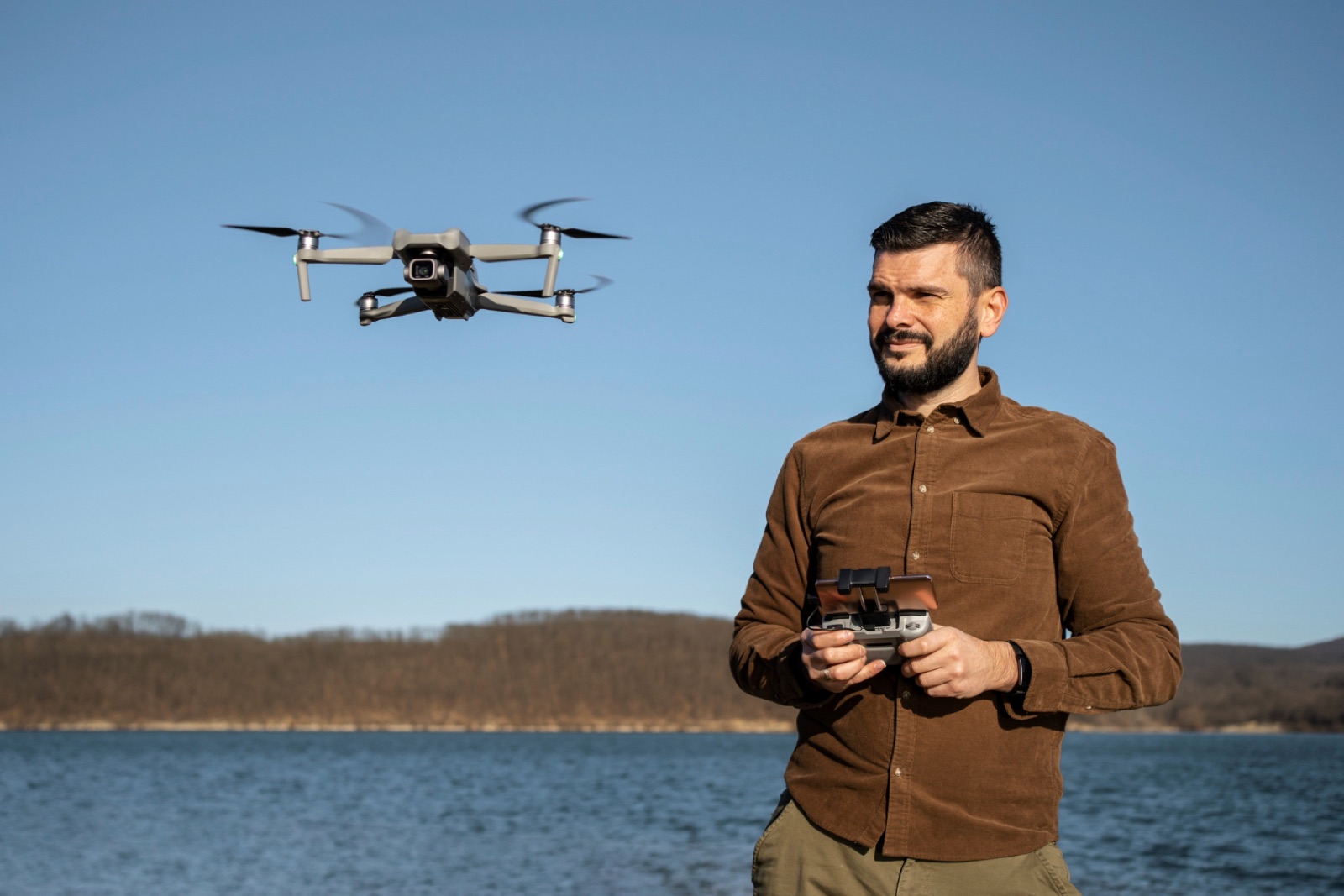
The role of drone pilots has traditionally involved a high level of manual skill, with pilots flying drones manually to gather data or perform specific tasks. However, as artificial intelligence (AI) and robotics technology continue to evolve, so too does the role of the drone pilot. Today, pilots are not only tasked with direct control of drones but also with overseeing autonomous flights, integrating AI into drone systems, and ensuring the successful execution of complex missions. This shift reflects broader trends in automation and technological advancement, revolutionizing industries that rely on drone technology, such as agriculture, logistics, construction, and environmental monitoring.
The traditional role of a drone pilot
In the early days of drone operations, drone pilots were required to have extensive manual flying skills. They would navigate drones through direct control, often relying on visual line-of-sight and remote control equipment. The primary tasks of these pilots included surveillance, surveying, and other specialized operations that demanded a high degree of precision. They were responsible for maintaining the drone’s flight path, monitoring equipment, and ensuring the safety of both the aircraft and the surroundings.
The impact of artificial intelligence on drone operations
With the introduction of AI, the traditional role of a drone pilot has shifted significantly. AI-enabled drones are now capable of performing autonomous missions without requiring direct control from a human operator. These drones can navigate through complex environments, avoid obstacles, and make real-time decisions based on data collected through sensors and cameras. As a result, drone pilots have transitioned from hands-on flying to overseeing AI-powered drone operations, with an emphasis on safety and mission outcomes.
The integration of AI into drone systems allows for greater efficiency, accuracy, and scalability. For example, drones used in agriculture can now analyze crop health, automatically adjust flight paths, and even apply fertilizers or pesticides. In logistics, drones are capable of autonomously delivering packages to designated locations, improving delivery times and reducing operational costs. This shift in operational control places new demands on drone pilots, who must be skilled in managing AI systems, troubleshooting autonomous operations, and ensuring that drones perform tasks within regulatory guidelines.
Robotics and AI: Enabling more complex drone missions
Robotics plays a crucial role in enhancing the capabilities of drones. By integrating robotic components, drones can now perform tasks that were once impossible or too risky for humans. For example, drones can conduct infrastructure inspections on bridges or power lines, where human access is limited or hazardous. These robotic drones are equipped with robotic arms or tools, enabling them to manipulate objects, capture detailed imagery, or even repair equipment while in flight.
This evolution in drone technology requires drone pilots to possess not only flying skills but also a deep understanding of robotic systems. Pilots must now monitor the performance of the drone’s robotic components, make adjustments when necessary, and ensure that the drone is operating efficiently and safely. Furthermore, pilots must be familiar with AI algorithms that guide the drone’s decision-making process, as these algorithms are responsible for interpreting sensor data and determining the drone’s next actions.
Remote supervision and monitoring of AI-driven drones
As drones become more autonomous, the role of the drone pilot increasingly focuses on remote supervision and monitoring. Instead of manually controlling the drone’s flight path, pilots now oversee multiple drones simultaneously, ensuring that AI systems are functioning as expected. This shift allows companies to deploy drones more efficiently and scale operations without the need for a large team of pilots.
For instance, a single pilot can monitor a fleet of drones in a large agricultural field, each drone operating autonomously to gather data or perform tasks like crop spraying. The pilot’s primary responsibility is to ensure that all drones are operating safely, that data is being collected accurately, and that AI-driven systems are performing optimally.
This shift also means that drone pilots must develop a new skill set. They must be proficient in operating drone management software, which allows them to monitor the status of each drone, receive real-time updates, and intervene if necessary. The software often integrates AI-driven insights, providing pilots with predictive data about potential issues, such as battery life or mechanical failure.
Grasshopper Air Mobility: Pioneering the future of drone operations
One of the companies working on AI and robotics in drone operations is Grasshopper Air Mobility. It applies autonomy to industrial cargo between sites rather than to passengers or to city-centre delivery. Its aircraft were designed to navigate a known route without a pilot flying them, which is what makes emergency and unattended deliveries possible at all.
Grasshopper Air Mobility is also pushing the boundaries of what drones can achieve in terms of robotics. Their aircraft was designed to perform precise tasks, such as unloading specific packages at specific locations, or automatically exchanging batteries. The integration of AI would let these drones make real-time decisions about how to best complete a mission, while robotics would let them interact with the environment in ways that were previously unimaginable.
Drone pilots working with companies like Grasshopper must be prepared to manage these advanced systems. While pilots no longer need to manually fly the drones, they must still ensure that the AI and robotics systems are functioning properly. This requires a combination of technical expertise, problem-solving skills, and a deep understanding of the underlying technology.
The future of drone piloting: Skill evolution and job opportunities
The evolution of the drone pilot role opens up new career opportunities for those with the right skills. As drones become more autonomous, the demand for pilots who can manage AI-driven systems is expected to grow. These pilots will be responsible for ensuring that drones operate within safety parameters, managing fleets of drones, and troubleshooting technical issues that arise during missions.
To meet the changing demands of the industry, drone pilots will need to develop skills in AI, robotics, and data analytics. Understanding how to program and interact with AI systems will become an essential part of the job. Pilots will also need to stay up-to-date with regulatory changes, as governments around the world implement new laws and guidelines for drone operations.
In addition to technical expertise, the future of drone piloting will require strong problem-solving skills and the ability to adapt quickly to changing circumstances. Pilots will need to think critically about how to ensure the success of a mission, troubleshoot unexpected issues, and manage multiple drones in real time. The role of the drone pilot is no longer just about flying a drone, but about overseeing a highly complex system that involves a combination of AI, robotics, and human oversight.
As AI and robotics continue to evolve, the role of the drone pilot is shifting from manual control to remote supervision and system management. Pilots are now responsible for overseeing autonomous drones, integrating AI systems into their operations, and ensuring that these drones perform complex tasks safely and efficiently. Companies like Grasshopper Air Mobility are leading the way in integrating these technologies into real-world drone applications, opening up new opportunities for drone pilots who are skilled in both AI and robotics. The future of drone piloting is bright, offering exciting career prospects for those ready to embrace the technological advancements that are shaping this industry.