


 Blog
Blog
Smart logistics examples in 2026: Real cases of automation and innovation
The logistics landscape of 2026 bears little resemblance to the rigid, manual supply chains of a decade ago. Data is the fuel, AI is the engine, and automation is the chassis.
Editor’s note, August 2026. This post is from June 2026 and describes what Grasshopper was building at the time. The full-scale e350 was never built. Its scale proof of concept flew in September 2025, and we closed the chapter in 2026. See the e350.
The logistics landscape of 2026 bears little resemblance to the rigid, manual supply chains of a decade ago. We have officially entered the era of Smart Logistics, a paradigm where data is the fuel, AI is the engine, and automation is the vehicle.
In 2026, “smart” does not only mean “connected”. It means anticipatory. We are seeing global supply chains that do more than react to disruptions. They predict them weeks in advance and reroute themselves autonomously.
What is smart logistics in 2026?
Smart logistics refers to the integration of advanced technologies like the Internet of Things (IoT), Artificial Intelligence (AI), Blockchain, and Robotics into traditional logistics operations. The goal is simple: efficiency, transparency, and sustainability.
The core pillars of 2026 innovation:
-
Hyper-Automation: Machines handling not just the physical movement, but the decision-making process.
-
Digital Twins: Real-time virtual replicas of entire supply chains that allow for risk-free stress testing.
-
Last-Mile Sovereignty: The final leg of delivery is no longer a bottleneck, thanks to autonomous systems.
Real-world smart logistics examples
To understand the impact, let’s look at the industry leaders who have moved beyond “pilot programs” into full-scale implementation.
1. Fully autonomous warehousing: Ocado & DHL
In 2026, the “Dark Warehouse” (a facility that requires no lights because there are no humans inside) is no longer a myth.
-
Ocado: bots move across a three-dimensional storage grid under an AI control system. Ocado’s own published figure is that the technology lets its partners pick a 50-item order in five minutes.
-
DHL’s Vision Picking: augmented reality glasses put a digital overlay on the warehouse and guide the picker to the exact bin and item. DHL reported a 25 percent efficiency gain in its 2015 pilot with Ricoh, and an average productivity improvement of 15 percent once the programme went global.
2. Predictive supply chains: Amazon’s “Anticipatory shipping”
Amazon has perfected the art of predictive logistics. By utilizing deep learning algorithms, they no longer wait for you to click “buy.” Based on browsing habits and historical data, products are moved to local fulfillment centers before the order is even placed.
3. Blockchain for transparency: Maersk & IBM
Maersk and IBM built TradeLens to put container documentation on a blockchain, and at its height it carried more than half of global container traffic. They announced its discontinuation in November 2022 and took it offline the following year, saying it had not reached the industry-wide collaboration it needed to be viable. It is the most useful example on this list, because it shows that in logistics a technology only works when enough competitors agree to use it.
The rise of aerial intelligence: drones in 2026
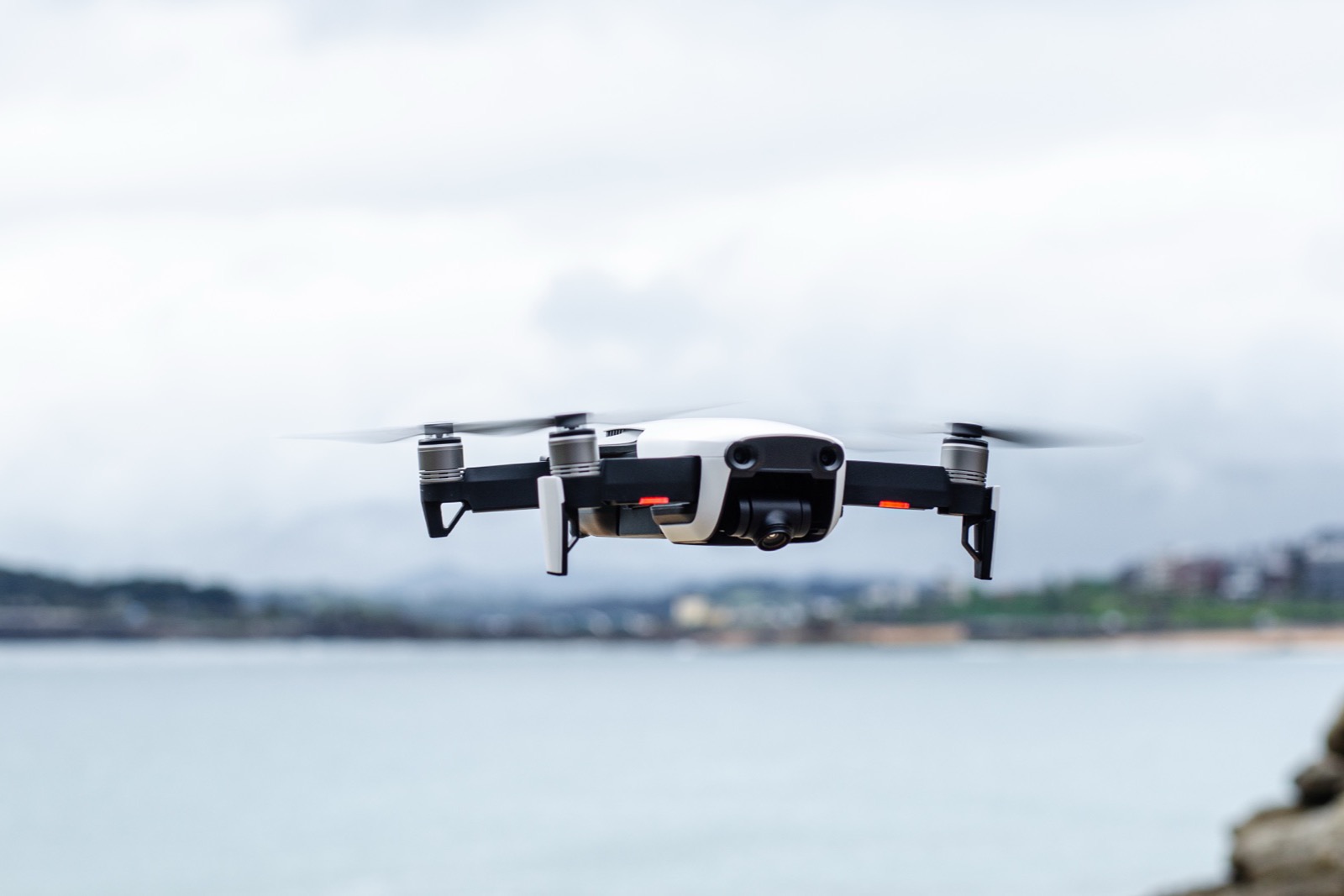
If 2024 was the year of testing, 2026 is the year of ubiquity. Drones have become the “secret weapon” for overcoming urban congestion and reaching remote geographical areas.
Grasshopper and the mid-mile
Grasshopper was named Best Logistics Startup of Spain by the Centro Español de Logística in 2025, for its work on moving heavy cargo between hubs.
Why Grasshopper is leading the way:
-
Flight and drive: the e350 was designed to land, fold its wings to three metres and drive on its own wheels to the building that wanted the cargo.
-
Payload versatility: from temperature-sensitive medical supplies to industrial cargo, Grasshopper designed for specialized transport.
-
Energy efficiency: Grasshopper designs for zero-emission, fully autonomous operation.
Key technologies driving the change
| Technology | Impact on logistics | Status in 2026 |
|---|---|---|
| 5G/6G Networks | Enables real-time communication between millions of IoT devices. | Standardized globally |
| AI/Machine learning | Optimizes routes and predicts demand spikes. | Autonomous decision-making |
| Autonomous drones | Solving the “Last-Mile” delivery crisis. | High adoption |
| Edge computing | Processes data on the device rather than the cloud for instant reactions. | Critical for robotics |
The environmental impact: Green logistics
Smart logistics is not only about speed. It is about survival. In 2026, carbon taxes and consumer demand have made sustainability a non-negotiable metric.
-
Route optimization: empty running is the target. Industry estimates put the share of truck miles driven without cargo at somewhere between 15 and 35 percent depending on the type of carrier, and that spread is the gap routing software exists to close.
-
Electric fleets: FedEx reports close to 9,500 electric vehicles across its global fleet and says half of the purchase orders for its own pickup-and-delivery vehicles are now electric. That is a rate of replacement rather than a share of the fleet, and the two are confused often.
-
Drone delivery: the measured comparison is narrower than the marketing one. For small packages the peer-reviewed estimate is between 23 and 54 percent lower greenhouse gas emissions than a diesel truck, and where a given route lands in that range depends on how clean the local electricity is.
Challenges and the path forward
Despite the progress, 2026 still faces hurdles:
-
Regulation: Governments are still catching up with the speed of autonomous flight.
-
Cybersecurity: A “smart” supply chain is a vulnerable one. Protecting data from hackers is now a top-tier logistics priority.
-
Infrastructure: Developing the “vertiports” and charging stations needed for widespread drone use remains an ongoing project.
The future is here
Smart logistics in 2026 is a symphony of moving parts, orchestrated by data. From the deep-sea containers tracked via blockchain to the cargo drones being designed for the mid-mile, the industry has shifted from “moving boxes” to “managing information.”
For businesses looking to survive the next decade, the message is clear: Automate or be left behind. The technology is no longer a luxury. It is the foundation of global commerce.